
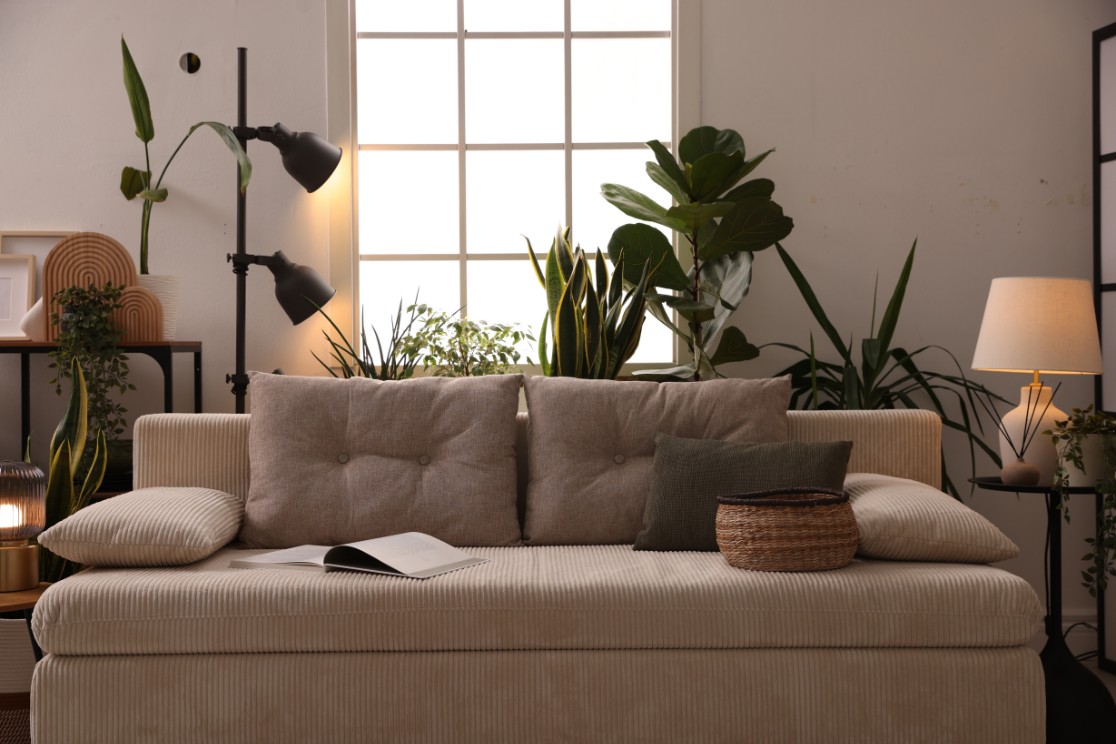
You have the flat. You have a rough vision in your head. But somewhere between moving in and making it feel like home, most people get stuck, overwhelmed by choices, unsure of costs, and uncertain about who to trust with a decision this significant.
If you have been searching for an affordable interior designer in Noida for flats, you already know the market is crowded. Every studio promises transformation. Every portfolio looks polished. So how do you separate genuine expertise from a good Instagram feed?
This guide breaks down exactly what to look for, what to expect, and how to make your flat interior project a success, without overspending or compromising on quality.
Noida's residential landscape is diverse and constantly evolving. From compact 2BHK apartments in Sector 62 and Sector 137 to larger 3 and 4BHK flats across Greater Noida West and Noida Extension, each home comes with its own architectural personality and constraints—making it essential to find an affordable interior designer in Noida for flats who can tailor solutions to different layouts and budgets.
Common challenges that Noida flat owners face include:
Limited square footage that needs to work harder than it looks. A 900 sq ft flat should never feel like 900 sq ft once it is designed well. Smart spatial planning, built-in storage, multi-functional furniture, visual tricks with light and colour, can make even compact apartments feel genuinely spacious.
Natural light limitations in mid-floor apartments surrounded by other towers. The right material palette and lighting design can compensate dramatically for what the architecture doesn't offer.
Storage, always storage. Most apartments in Noida are designed with builder-grade wardrobes and minimal utility planning. A good interior designer reclaims space from dead corners, awkward alcoves, and underused walls, without making the home feel boxed in.
Builder finishes that need an upgrade. Developer-grade tiles, basic electrical fittings, and standard door frames are functional, but they rarely reflect the standard of living the homeowner aspires to. Knowing which upgrades deliver the most visual impact for the investment is a skill that separates experienced designers from those still learning.
There is a damaging misconception in the market: that affordable design means cheap materials, rushed execution, or creativity on a leash.
It doesn't.
Affordable interior design is about value density, getting the maximum quality, functionality, and aesthetic impact from every rupee you spend. It requires a designer who understands material costs deeply, who knows where to invest and where to hold back, and who doesn't pad project costs with unnecessary elements simply to increase billing.
Here is what that looks like in practice:
This kind of considered decision-making is what separates a flat that looks designed from a flat that merely looks decorated.
For most homeowners, the most stressful part of an interior project isn't the design, it's the execution. Managing contractors, chasing vendors, supervising quality, and coordinating timelines while holding down a full-time job is genuinely exhausting.
This is where turnkey interior design services change the equation entirely.
A true turnkey model means one point of contact, one accountable team, and complete end-to-end management, from the first design concept to the final walkthrough. It covers space planning, material procurement, civil and carpentry work, electrical and lighting, painting, soft furnishings, and styling. Nothing falls through the cracks because everything sits under one roof of responsibility.
Beyond convenience, the turnkey model also protects your budget. When a single studio manages procurement and execution, there is no room for vendor markups, miscommunication costs, or the expensive mistakes that happen when multiple uncoordinated parties work on the same project.
For working professionals and families in Noida, this is often the difference between a project that energises them and one that exhausts them before a single piece of furniture is placed.
Before signing a contract with any studio, ask these questions:
Do they visit the site before quoting?
A designer who quotes without seeing the space is giving you a number, not a plan. A site visit reveals structural constraints, natural light patterns, and spatial opportunities that fundamentally shape the design approach.
Is the design truly custom, or templated?
Ask to see two or three past projects. If they look like variations of the same layout with different colour schemes, the studio is working from a formula. Great flat design should feel specific, shaped by the people living in it, not lifted from a catalogue.
Who manages the execution?
Many designers hand off the project to contractors once the concept is approved. Find out whether the designer stays involved through execution or disappears after the mood board is delivered.
What does the contract cover?
Transparent documentation of scope, materials, timelines, payment schedules, and escalation clauses is non-negotiable. Vague agreements are the most common source of mid-project disputes.
Can they show you completed projects, not just renders?
Renders are aspirational. Completed spaces are honest. The gap between the two tells you a great deal about how a studio works.
A well-run interior project follows a clear, structured process, and understanding it helps you ask the right questions and set the right expectations.
Consultation and space analysis comes first. This is a genuine conversation about how you live, your daily routines, your storage needs, your aesthetic references, your non-negotiables. A good designer listens far more than they speak at this stage.
Concept and visualisation translates that understanding into layouts, 3D renders, and material selections. You should be able to see and feel the proposed design before any work begins. Changes at this stage are easy. Changes during execution are expensive
Execution and supervision is where the real work happens. Materials are procured, craftspeople are coordinated, quality is checked at every stage, and timelines are managed with discipline.
Styling and handover is the final stage, where furniture is placed, lighting is calibrated, accessories are added, and the space is photographed. The handover is not complete until the space feels exactly right.
There is a reason experienced designers consistently deliver better results for the same budget. They have made costly mistakes, and paid for them, earlier in their careers. They know which contractors are reliable and which aren't. They know which materials perform as promised and which fail within a year. They know how to read a space and understand intuitively what it needs.
This accumulated judgement is what you are really paying for when you hire a seasoned interior designer, not just the drawings or the sourcing, but the ability to anticipate problems before they become your problems.
Smita Nigam Design Studio brings over 10+ years of hands-on experience to every project in Noida and Greater Noida. With 98+ completed projects and a turnkey model that places the designer personally at the centre of every stage, the studio has built its reputation on one principle: nothing leaves this studio until it feels exactly right.
If you are looking for an apartment interior designer in Noida who combines creative rigour with honest, transparent project management, this is where your search ends.
Start Your Flat Transformation Now

"Our dedication to excellence has solidified our reputation as a leading name in interior designing industry."
Costs vary based on apartment size, scope of work, and material quality. A well-planned 2BHK can be transformed beautifully within a mid-range budget if the design decisions are made intelligently. The key is working with a designer who helps you prioritise spend, investing where it matters most and holding back where it doesn't. Always ask for a detailed, itemised quote so you understand exactly what you are paying for.
A full turnkey service covers everything from initial space planning and concept design to material procurement, civil work, carpentry, electrical, painting, soft furnishings, and final styling. The client is consulted at key decision points but is not required to manage or coordinate anything day-to-day. It is genuinely end-to-end.
A standard 2BHK flat is typically completed within 45 to 60 days from design approval, depending on the scope of work. Larger apartments or projects with significant structural changes may take longer. What matters most is that the timeline is agreed in writing upfront and honoured throughout.
Yes, and a good designer should be able to work within a defined budget from the very first consultation. Be upfront about your ceiling. This allows the designer to make informed material and scope recommendations from the start, rather than presenting a plan that needs to be scaled back later.
Absolutely. Many homeowners choose to prioritise the living room, kitchen, and master bedroom in the first phase, and address secondary bedrooms or utility areas later. A well-structured design plan accounts for this from the beginning, ensuring that future phases integrate seamlessly with the completed work rather than looking like afterthoughts.

Get expert advice and start planning your dream interior with Smita Nigam. Schedule your consultation today.